
A marketing team can now produce a dozen image concepts before its first meeting ends. Generative AI has made that possible. But creating a convincing visual and approving it for a national advertising campaign are two different tasks. Before a creative asset appears on a landing page, in a paid social ad or in a customer presentation, someone still needs to establish where it came from and what the company is allowed to do with it.
Licensed visual content remains valuable because it turns asset selection into a process with identifiable permissions, conditions and records. Those details help teams reuse material responsibly, coordinate with agencies and spot problems before publication. A license is not an all-purpose legal guarantee, and AI tools are not inherently unsuitable. The goal is to make each asset accountable to the job it is meant to perform.
From Creative Idea to Approved Campaign Asset
Imagine a software company preparing a product launch. The design team wants a photograph of people working together in a modern office. It could commission a shoot, license a suitable image or generate a synthetic scene. All three approaches may work, but the review questions differ.
A commissioned shoot calls for appropriate agreements with the photographer and, where necessary, depicted people or property owners. A stock image comes with published or negotiated license terms that must fit the campaign. An AI-generated scene requires review of the provider's terms, output characteristics and potential third-party interests. None of those routes should be treated as automatically risk-free.
This is why a useful production brief includes more than mood and color. It should identify the intended channels, the type of audience, whether the image implies a real endorsement and whether the asset may later appear in packaging, templates or merchandise.
Four Questions a Brand Should Answer Before Choosing an Image
Is the planned use actually covered?
An image described as royalty-free is not unrestricted. In stock licensing, the term usually refers to a payment model rather than an absence of conditions. Website illustrations, social media promotion, product packaging and items intended for resale can fall under different rules. Read the applicable agreement instead of assuming one download covers every future format.
The distinction between commercial and editorial content is particularly important. An image marked Editorial Use Only may be appropriate to illustrate a news report but is not ordinarily cleared for a branded advertisement. Changing its color or adding a company logo does not turn it into commercial stock.
Could the image suggest an endorsement or misleading real-world claim?
A photograph of a recognizable person in a campaign may imply that the person uses or recommends a product. An AI-generated face can also create reputational issues, especially if it resembles someone real or is presented as authentic documentary evidence. Review the context as carefully as the image itself. Usage rights and truthful advertising are separate requirements.
Who will access the original file?
Campaign production often involves designers, freelancers, agencies, sales teams and clients. Sharing a final advertisement is not necessarily the same as distributing the underlying image file. License terms can restrict access, transfers and the number of authorized users. For example, Shutterstock's current online terms distinguish single-seat access from team and enterprise arrangements. A company should choose the account structure that matches the people handling the assets.
Can the team prove what was approved?
A screenshot of a shopping cart is a weak licensing record. Keep the asset ID, source, purchase or download confirmation, applicable license version, acquisition date and intended uses in a project register. Also record any separate permission obtained for a person, brand or property where relevant. This gives future campaign owners a starting point for reusing the work without reconstructing its history.

A Five-Stage Workflow for Licensed Media and AI
1. Define the destination. List where the content will appear: a company website, paid social campaign, email, printed material or another channel. Flag any plan to sell a product bearing the image.
2. Select a suitable source. Choose a stock asset, an original commission or AI-generated artwork based on the message. For reality-based claims, use material that can honestly represent what you are communicating. For purely conceptual illustrations, AI may be a good starting point.
3. Review rights before editing. Confirm the precise license, editorial restrictions and relevant clearances. For generated images, review the AI service's commercial-use terms and the output itself. Permission from a tool does not necessarily provide exclusive rights or guarantee the absence of third-party claims.
4. Produce without losing track of the source. Designers may crop, animate or combine images when the relevant terms allow it. AI-assisted edits deserve an additional check: the tool may receive uploaded inputs, and its terms can affect how those inputs are handled. Avoid assuming that an AI edit cancels the original image license.
5. Archive the decision, not just the export. Store the approved creative alongside its rights record, responsible reviewer and publication context. If the image is later used in a substantially different product or channel, review it again.
This process is intentionally lightweight. A small business can start with a shared asset register and a single owner for rights checks, provided access to licensed originals follows the applicable agreement.
Where Shutterstock Fits Without Replacing Due Diligence
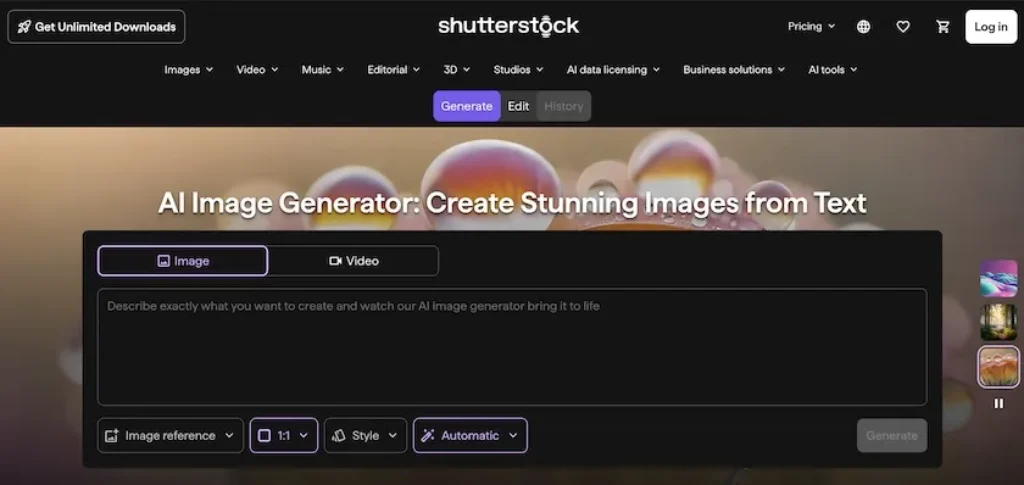
For teams seeking existing photography, illustrations or footage, Shutterstock can serve as a practical sourcing option. Its image-license guidance differentiates Standard and Enhanced terms, so marketers can compare the planned use against the relevant permissions rather than relying on the label “stock photo.” It also offers AI-related creative tools under their own applicable terms.

That combination supports a flexible process: use professionally produced media when a campaign needs a particular real-world scene, and use AI for concepts, copy directions or approved creative variations. It does not mean that every Shutterstock image can be shared among unlimited colleagues, used as a logo or applied to any merchandise. The exact agreement remains the authority.
Why Documentation Matters More as Content Multiplies
Generative tools make it easy to produce dozens of variations from an original concept. Without a record, however, the team may no longer know which version came from a licensed photograph, which was generated independently or which was cleared for a particular client. That uncertainty grows when people change roles or a successful campaign is reused six months later.
Treat the rights record as part of production metadata, alongside the file name, format and final approval. A simple naming convention and a reference to the original asset are often more useful than a complicated policy nobody follows.
Frequently Asked Questions
Is royalty-free imagery automatically safe for advertising?
No. Royalty-free describes a licensing approach, not unlimited permission. The license, intended use and any additional restrictions still need to be checked.
Can several colleagues use one Shutterstock account?
Do not assume so. Shutterstock's current terms distinguish individual single-seat access from plans for multiple authorized users. Select the arrangement that fits how the team accesses and edits the source assets.
Does an AI-generated image remove the need for brand review?
No. A commercial-use allowance from a generator does not by itself establish exclusivity or resolve likeness, trademark and advertising concerns.
Should image permissions be checked again when a campaign is repurposed?
Yes, especially when the new use differs materially from the original plan, such as moving from a website graphic to a product sold to customers. The first license may not cover the new context.
Conclusion
The value of licensed content is not that it stops creative experimentation. It gives experimentation a clearer path to publication. As businesses produce more visuals with a mixture of photographers, stock libraries and AI systems, the ability to identify sources, check permissions and manage team access becomes a practical marketing skill. A disciplined workflow can preserve creative speed without treating rights as an afterthought.




 Stock Photo Guides
 Photo Buyer Guide
 Vector Guru