


The idea of beginning with a blank canvas has long been associated with creativity. It suggests freedom, originality and complete control over the final result. In commercial marketing, however, starting from zero also means recreating every basic component before the campaign can move forward.
That is becoming increasingly difficult to justify.
Marketing teams are now expected to produce far more visual content than in the past, often across several platforms at the same time. A single campaign may require website graphics, social ads, display banners, email visuals, presentation material, video content and regional adaptations. Each format adds another layer of production work.
Artificial intelligence is helping teams deal with this growing volume. Yet one of the most effective uses of AI may not be generating every image independently. A more efficient approach is emerging: begin with high-quality professional content and use AI to accelerate adaptation, variation and production.
Creative Production Includes Far More Work Than Audiences See
The finished campaign rarely reveals how much work went into producing it.
A single visual concept may eventually need to appear in ten or twenty different formats. Designers have to source or produce imagery, build layouts, prepare versions for mobile and desktop, integrate feedback, adapt files to different aspect ratios and make sure headlines, logos and calls to action remain readable across every placement.
None of this is unusual, but much of it is repetitive.
Creating another crop of an existing image may be necessary, yet it contributes little to the underlying campaign idea. The same is true of reconstructing backgrounds, searching repeatedly for similar images or recreating visual components that already exist elsewhere.
This creates an important distinction between creative work and production work. The first involves decisions about concept, message, positioning and aesthetics. The second ensures that those decisions can be executed across all the required formats.
AI becomes particularly valuable when it reduces the amount of time spent on the second category.
Stock Media Has Always Been About Saving Production Time
The basic promise of stock media has never been complicated: marketers do not need to produce every visual themselves.
A company that needs an image of a modern office, a city skyline, a family environment, an industrial setting or a travel destination can license existing professional material rather than organizing a separate shoot.
This has been one of the main reasons stock libraries became such an important part of commercial design.
Platforms such as Shutterstock expanded the model by making extensive collections of photography, illustrations, vectors and video searchable and accessible to creative teams. Instead of beginning every project with production logistics, marketers could start with material that already existed.

Historically, however, this efficiency came with a limitation. The selected asset often needed to be very close to the final requirement. If the subject was placed incorrectly, the aspect ratio did not fit or the composition lacked space for text, designers could spend significant time making manual adjustments or return to the search process.
AI-assisted editing changes that relationship.
“Close Enough” Can Now Be a Much Stronger Starting Point
A source asset no longer needs to match the final brief perfectly to be useful.
Imagine a creative team finding a photograph with the right mood, people, lighting and environment, but the original composition was designed for a landscape format. The campaign, meanwhile, requires vertical social ads, square graphics and a wide desktop banner.
In a conventional workflow, the mismatch might lead to another search or substantial manual reconstruction. With AI-assisted editing and modern creative tools, the same image can become a far more flexible starting point.
The question therefore changes.
Instead of asking whether an asset is already identical to the desired final output, teams can ask whether it contains enough of the right ingredients to make adaptation worthwhile.
That is a major shift because much of commercial design is not about creating entirely new visual ideas. It is about translating one strong idea into multiple contexts.
When existing assets become easier to reshape, the value of high-quality source material rises.
Stock Media Is Moving From Final Asset to Production Building Block
This is also changing the role of stock content.
For years, the typical workflow was relatively straightforward: find an image, license it, add copy and branding, and publish it. In many cases, the stock file was effectively treated as the finished visual.
Today, that approach is becoming only one option among many.
A stock photograph can serve as the main visual foundation for an entire campaign system. It might appear in a website banner, a paid-social ad, a presentation and a short video. A vector can become part of a broader branded layout. A video clip can be cut into multiple formats and reused across several platforms.
AI-assisted production increases that flexibility by making transformation faster.
The asset is therefore no longer valuable only because of what it already is. It is also valuable because of what it can become.
For large stock libraries, this changes the economics considerably. A professionally produced image can support a larger number of outputs and become a reusable component rather than a single-use creative.
Better Discovery Reduces a Major Source of Creative Waste
One of the most underestimated parts of visual production is search.
Creative teams can spend large amounts of time looking for content that is technically relevant but not quite right. A search may return thousands of images related to the subject, while only a handful actually match the desired tone, composition and brand style.
Consider a request for an international business team in a contemporary office. That might sound simple, but the real brief could be much more specific. The brand may want natural rather than artificial lighting, a relaxed but professional atmosphere, visible collaboration, sufficient negative space for copy and a composition that works well across digital formats. Each requirement narrows the field.

This is why improvements in search, recommendation and AI-supported discovery matter so much. Faster access to the right material means designers can spend less time browsing and more time working on the campaign itself.
Large collections such as Shutterstock's become more useful when better discovery makes scale manageable. The advantage is not simply having millions of possible assets. It is being able to move more quickly toward the small number that fit the brief.
One Creative Direction Must Serve an Entire Campaign Ecosystem
Modern campaigns rarely have one final output. A single concept may need to appear as:
- a desktop hero image,
- a mobile banner,
- a social-media ad,
- an Instagram Story,
- a LinkedIn visual,
- an email header,
- a display banner,
- a presentation graphic,
- a video thumbnail,
- and several creative testing variants.
Each format imposes different constraints.
A composition that works well on desktop may lose impact on mobile. A social ad may need a tighter crop, while display advertising might require additional space for copy. A video thumbnail must communicate quickly at small scale, while presentation graphics often need a cleaner and more restrained layout.
The creative idea can stay the same, but the production requirements change constantly.
This is where a strong source asset becomes particularly valuable. Instead of rebuilding the idea for every channel, teams can adapt one visual foundation into multiple versions.
Stock media supplies the starting point. AI reduces the work required to make it flexible.
Shorter Campaign Cycles Make Reusable Assets More Valuable
Campaign timelines are also shrinking.
Digital channels move quickly, and creative teams are increasingly expected to respond in real time. Social trends can disappear within days, ad performance can change quickly, and product or promotional campaigns may need several waves of fresh material during their lifetime.
Traditional production models can struggle under that pressure.
When every visual has to be created, reviewed, approved, resized and repurposed sequentially, the process quickly becomes too slow. By the time one set of assets is finished, the campaign may already need another.
AI-assisted workflows reduce the number of manual steps. Working with existing professional content reduces them further.
If the basic creative foundation already exists, teams can begin with modification rather than creation. That can make the difference between reacting to a campaign requirement immediately and missing the moment altogether.
AI Can Lower the Cost of Creative Experimentation
Another major benefit is testing.
Creative performance is difficult to predict. The image that receives the most enthusiasm internally does not always produce the strongest response from customers.
Small visual differences can matter: the person shown, the background, the framing, the amount of negative space or the general mood of the image can all influence performance.
Traditionally, testing several alternatives required additional design or production budget. This limited how much experimentation many teams could realistically perform. AI-assisted workflows change the economics of testing.
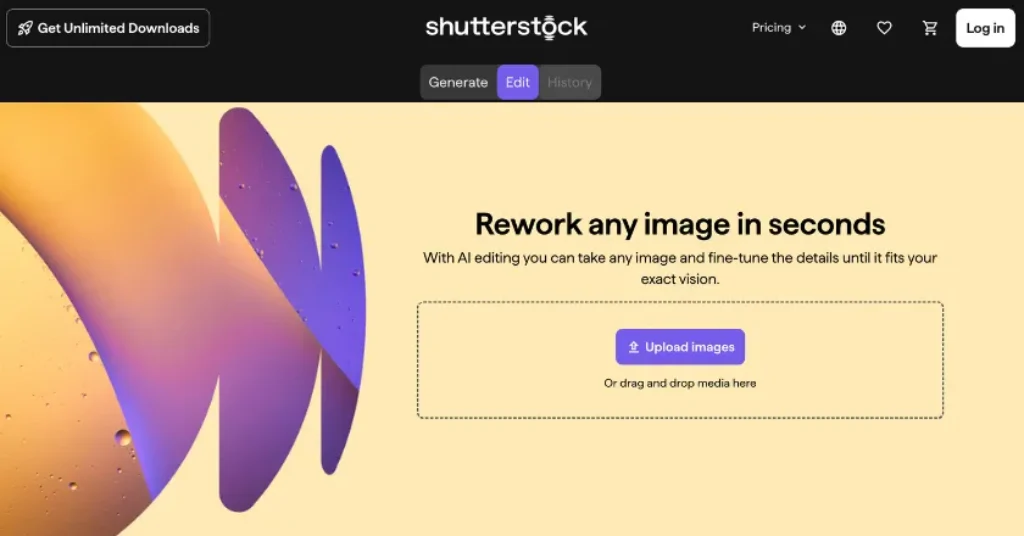
Teams can create more versions without commissioning a full production for each one. They can evaluate alternative hero visuals, different crops, localised subjects or platform-specific compositions and then allocate more resources to the concepts that actually perform.
Professional stock libraries support this model because they provide a large pool of related material that can serve as testing inputs.
The goal is not simply to create more versions. It is to learn faster.
Creative Fatigue Makes Variation a Continuous Requirement
Performance marketing also faces another problem: creative fatigue.
Even a strong advertisement can gradually lose effectiveness if users see the same visual repeatedly. This means campaign teams often need new creative executions before the overall message or offer has changed.
Producing an entirely new visual system every time would be inefficient.
A more sustainable approach is controlled variation.
Teams can keep the same creative identity while changing specific components: imagery, crop, background, subject, composition or format. This keeps the campaign fresh without making every new execution feel disconnected from the last.
AI-enhanced stock media is particularly well suited to this approach.
Teams can source a family of related professional images and use those assets to create several executions within the same visual system. The result is variety without chaos.
International Marketing Benefits From Flexible Source Content
The production challenge becomes even more significant when campaigns operate across several countries.
A global campaign may share the same strategic message but need different visual executions for individual markets. People, environments, clothing, cultural references and everyday settings can vary considerably between regions.
Producing dedicated photography for every country can quickly become expensive. Creating every version independently with AI can reduce costs but may create visual inconsistency if each execution develops in a different direction.
Professional stock libraries provide an alternative.
International teams can select imagery relevant to specific regions while maintaining a broader visual language across the campaign. The material can then be adapted using AI-assisted editing for individual formats, languages and channels.
Platforms such as Shutterstock are particularly useful here because broad catalogues make it possible to work across geography, industry and demographic contexts without commissioning an entirely new shoot for every market.
Human Creativity Moves Toward Higher-Value Decisions
The growing role of AI does not necessarily reduce the importance of creative professionals. Instead, it can change how their time is used.

A designer who no longer needs to spend an hour manually reconstructing a background can focus on composition and storytelling. An art director with access to several visual variants can compare different directions before making a final decision. A performance marketer can test more creative hypotheses, while brand teams can spend more time ensuring coherence across channels.
In other words, AI can reduce production friction without removing the need for human judgment.
Creative professionals still decide what fits the brand, what feels authentic, what communicates clearly and what deserves to be published.
AI can generate options. It does not automatically know which option is strategically correct.
Professional Source Material Still Matters
The quality of the starting point remains important.
AI-assisted editing can transform and extend an asset, but it does not guarantee that weak source material will become strong creative. Professional photography still offers intentional framing, lighting, timing, technical quality and authentic settings. The same applies to illustrations and professionally produced video.
These qualities give high-quality stock assets an important advantage as creative foundations.
The stronger the input, the less corrective work is required later.
That leads to a more useful question than simply asking whether AI can generate a certain image. Creative teams should ask which path is most likely to produce the strongest result with the least unnecessary work.
Sometimes that means generating something new. In other cases, a professionally produced asset may already be substantially closer to the desired outcome.
Higher Content Volumes Increase the Need for Consistency
AI makes it easier to create content at scale, but scale can introduce its own problems.
If several people independently generate visuals for the same brand, the output can quickly become inconsistent. One team member may create cinematic imagery, another bright lifestyle photography and another highly stylized illustrations.
Each individual asset might look professional. Together, however, they may fail to create a recognizable visual identity.
As content volume increases, consistency therefore becomes a production requirement rather than simply a branding preference.
Professional visual libraries can help provide a controlled starting point. Teams can establish recurring visual characteristics and then develop new executions within those boundaries.
AI becomes a tool for scaling the system rather than fragmenting it.
Starting From Zero Is No Longer Automatically the Most Creative Option
There is a cultural assumption that original creative work begins with nothing.
Commercial marketing does not necessarily benefit from that assumption.
Customers do not judge campaigns based on how many production hours were required. They respond to whether the visual communicates clearly, fits the brand, captures attention and supports the message.
If existing professional assets already provide the right setting, tone and composition, recreating those elements simply to say the work began from scratch may offer little practical value.
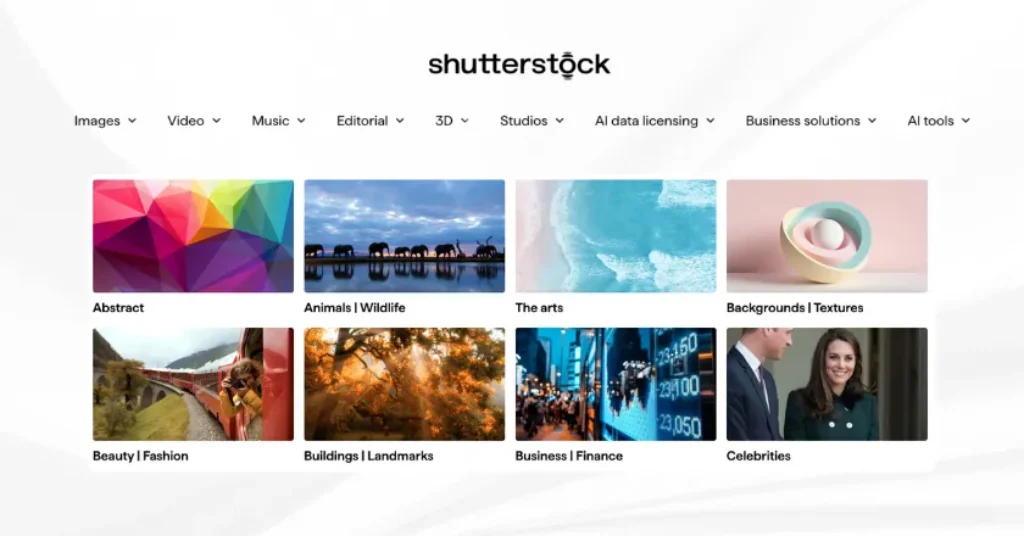
The smarter production decision is often to start with the strongest available material and spend creative energy where it can make a meaningful difference.
The Future of Creative Production Will Combine Several Approaches
Generative AI will continue to become more deeply integrated into marketing workflows. Teams will automate more editing, generate more variations and create increasingly personalized visual content.
That does not mean professional photography, stock media or human creative direction will disappear.
More likely, the future will be built around combinations.
Professional stock content provides reliable and high-quality starting material. AI makes that material easier to adapt, test and scale. Human teams determine the strategy, tone and creative direction.
Platforms such as Shutterstock fit naturally into this model because their role extends beyond supplying finished images. Large professional libraries can increasingly serve as raw material for faster and more adaptable production systems.
The biggest productivity gain may therefore not come from generating everything automatically. It may come from eliminating the parts of creative production that never needed to begin from zero in the first place.
Note: This article was created with the help of AI. The images in this article were generated using AI.





 Stock Photo Guides
 Photo Buyer Guide
 Vector Guru