
Shutterstock is taking a major step beyond the traditional stock content model. The company has introduced a new evolution of its creative ecosystem, transforming its content library into a human-led, AI-powered platform designed for the way modern brands, marketers, agencies, and creators now produce visual content.
Rather than presenting AI as a replacement for creative work, Shutterstock is positioning it as a practical layer built on top of trusted, human-made content. The updated platform combines premium licensable assets, generative AI tools, editing features, search improvements, workflow support, and commercial safeguards in one connected environment.
The goal is clear: help creative teams move faster while still maintaining quality, control, authenticity, and confidence in how their content can be used.
From Stock Library to Creative Production System
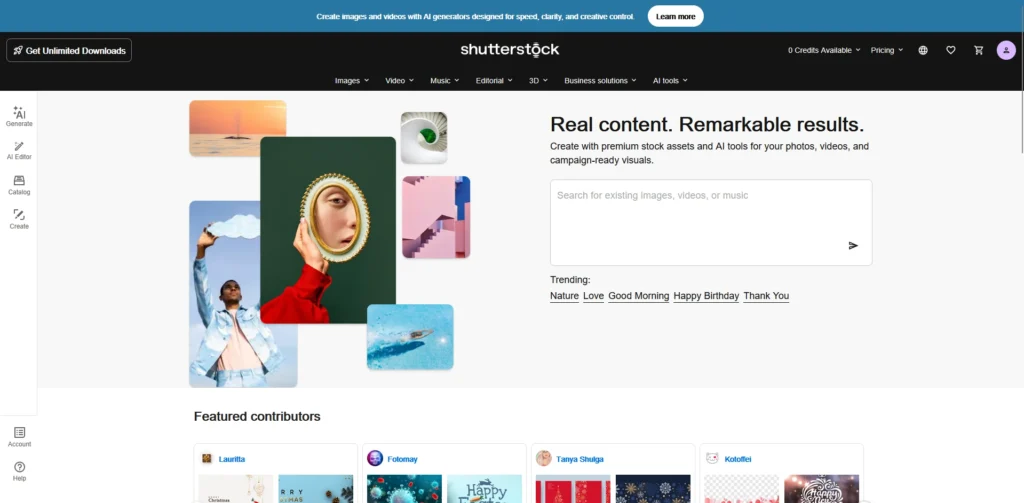
For years, Shutterstock has been known as a destination for images, videos, music, illustrations, editorial assets, and other creative content. With this latest platform update, the company is expanding that role. Shutterstock is no longer only a place where users search for finished assets. It is becoming a workspace where ideas can be discovered, adapted, refined, and turned into campaign-ready material.
This shift reflects how creative production has changed. Many teams no longer want to begin every project with a blank canvas. They want strong starting points, flexible tools, and a faster path from concept to finished output. Shutterstock’s new platform is built around that need.
Users can begin with real content created by contributors around the world, then use AI-powered tools to customize the asset for a specific brand, format, campaign, or audience. This creates a workflow that feels less fragmented than moving between separate search tools, AI generators, editors, and licensing platforms.
Real Content Remains at the Core
One of the most important parts of Shutterstock’s approach is its emphasis on human-made content. The company is not simply introducing another generative AI tool. Instead, it is building AI capabilities around a large collection of authentic, licensable creative assets produced by real contributors.
That distinction matters. In a market where many businesses are exploring AI but still worry about originality, rights, consistency, and commercial use, Shutterstock is leaning into the value of trusted source material. AI can then be used to extend, reshape, enhance, or personalize that material rather than replacing the human creative foundation completely.
For creative professionals, this can make AI feel more practical. A nearly perfect image or video can become the starting point for a more specific result. Instead of rejecting an asset because one detail is wrong, users may be able to adjust it, refine it, or generate related variations directly within the platform.
AI Tools Built Into the Workflow
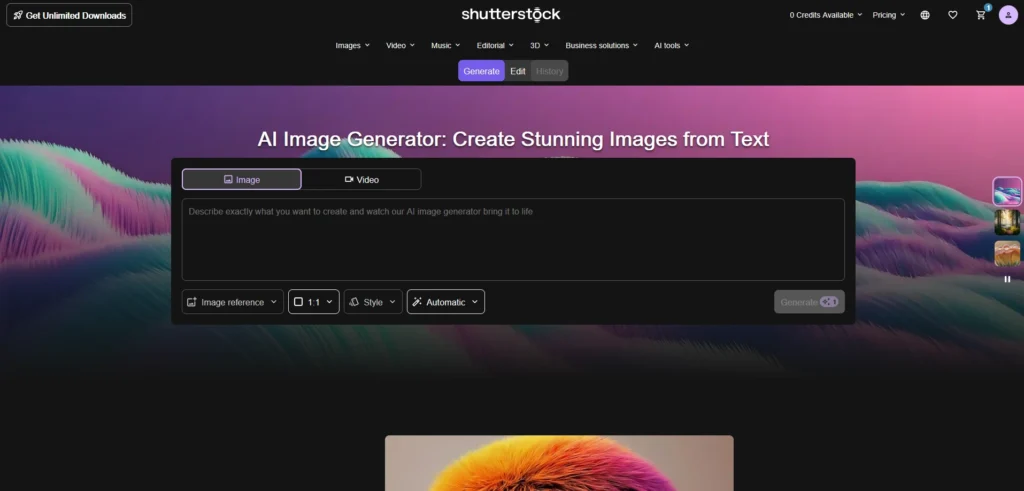
The updated Shutterstock platform brings together several AI-powered capabilities that are designed to support the full creative process. These include image and video generation, inline editing, conversational search, prompt enhancement, and reference-based creation features.
Conversational search is especially relevant for users who do not want to rely only on traditional keywords. By allowing users to search with more natural language, Shutterstock aims to make discovery more intuitive and better aligned with creative intent.
The platform also includes tools such as content reference and first frame reference. These features are useful for maintaining visual direction and consistency when generating or adapting assets. For teams working across campaigns, formats, or brand systems, that consistency can be a major advantage.
Another notable feature is Shutterstock’s proprietary Model Match technology. Instead of requiring users to decide which AI model is best for a specific task, Model Match is designed to connect a prompt with the most suitable model automatically. This reduces complexity and allows users to focus more on the creative result than on the technical process behind it.
A More Connected Creative Environment
One of the biggest frustrations with AI adoption in creative work is fragmentation. A marketer might search for assets in one place, generate ideas in another, edit in another, and then still need to check whether the final result can be used commercially. Shutterstock’s platform update is meant to reduce that friction.
By combining search, generation, editing, licensing, and support within a single ecosystem, Shutterstock is trying to create a more connected production environment. This could be especially valuable for teams that need to create content at scale but cannot afford inefficient workflows or unclear usage rights.
The company is also expanding into AI-native environments, including a Shutterstock app available in ChatGPT. This signals a broader strategy: Shutterstock wants its content and creative tools to be available where users are already developing ideas, writing prompts, planning campaigns, and producing visual concepts.
Commercial Readiness as a Key Selling Point
Speed is valuable, but for businesses it is not enough. Creative assets must also be usable in real campaigns. That means companies need confidence around licensing, rights, quality, and brand suitability.
Shutterstock is addressing this by emphasizing commercial-ready licensing and indemnification for AI-generated content, supported by human review. This is an important part of the platform’s positioning because many organizations remain cautious about using AI-generated visuals in public-facing campaigns.
For brands and agencies, the appeal is not just that AI can produce content quickly. The stronger promise is that AI-assisted content can be created within a system that also considers practical business requirements.
Contributors Still Play an Important Role
Shutterstock’s platform update also highlights the continued role of contributors. When contributor-created content is edited with AI tools and then licensed through the platform, contributors can continue to earn royalties.
This is an important message at a time when many creatives are concerned about how AI may affect their work and income. Shutterstock is presenting its model as one where human creativity remains part of the value chain, even as AI tools become more deeply integrated into content production.
Rather than treating contributors and AI as opposing forces, Shutterstock is attempting to connect them. Human-made assets provide the foundation, while AI expands what users can do with those assets.
Beyond Creative Tools: Shutterstock’s AI Infrastructure Business
The platform launch also fits into Shutterstock’s larger AI strategy. The company is not only serving marketers and creative professionals. Through its Data Licensing & AI Services business, Shutterstock also works with AI developers and technology companies.
This part of the business focuses on licensed training data, curated datasets, model evaluation, fine-tuning, human-in-the-loop workflows, creative feedback, benchmarking, and model improvement. In other words, Shutterstock is positioning itself both as a creative platform for end users and as an infrastructure partner for companies building AI systems.
This dual role gives Shutterstock a broader place in the AI economy. It supports the creation of visual content while also contributing to the development and improvement of the AI models that power modern creative tools.
A Platform Built for the Next Stage of Creative Work
Shutterstock’s latest move reflects a broader shift in the creative industry. AI is becoming part of everyday production, but many businesses still need solutions that combine speed with trust. They want tools that help them create more efficiently without losing human direction, commercial safety, or creative quality.
By bringing together human-made content, AI-powered generation and editing, natural language discovery, workflow features, licensing support, and human expertise, Shutterstock is moving beyond its role as a stock content provider.
The company is positioning itself as a full creative platform for a market where inspiration, production, customization, and commercial deployment increasingly need to happen in one place.
For creative teams, the value of this approach is straightforward: start with something real, use AI to shape it into something more specific, and move from idea to finished asset with greater speed and confidence.





 Stock Photo Guides
 Photo Buyer Guide
 Vector Guru