

Visual content has always been central to marketing, but in 2026, the demand for it has reached an entirely new level. Brands are expected to publish consistently across multiple channels, adapt quickly to trends, and maintain visual quality at scale.
In this context, choosing between stock photography and custom shoots is no longer just about budget—it’s about efficiency, flexibility, and return on investment.
Rather than competing solutions, these two approaches serve different strategic purposes. Understanding when to use each is what ultimately drives results.
| Concept | Stock Photography | Custom Photography | Hybrid |
|---|---|---|---|
| Cost | $0.20 – $350 per image | $1,000 – $50,000+ per session | Mid-range |
| Turnaround | Instant | Slow | Instant/slow depending on format |
| Best for | High-volume ads, blog posts, social media, visual testing. | Hero images, product pages, core brand visuals. | Scaling content and maintaining brand value |


Understanding the Cost Behind Each Approach
Budget still plays a critical role in content decisions, but what matters today is how predictable and scalable those costs are.
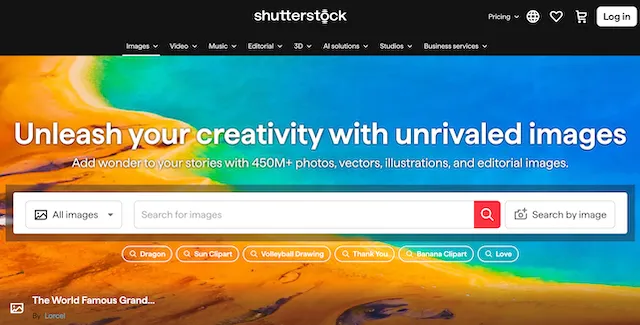
Stock photography offers one of the most controlled pricing models available. Platforms like Shutterstock provide access through subscriptions or image packs, both of which are designed to reduce the cost per image as usage increases. This makes it especially attractive for teams producing content regularly.
With Shutterstock's pricing, costs typically range from a few cents per image to premium pricing for exclusive or high-end visuals. Licensing also affects pricing, with standard licenses covering most marketing uses and extended licenses enabling broader commercial applications.
Custom photography, on the other hand, operates on a project-based model. Expenses quickly accumulate beyond the photographer’s fee, including:
- Studio rental
- Talent and styling
- Props and logistics
- Post-production editing
When all elements are considered, a single shoot can easily move from a few thousand dollars to tens of thousands. While the output is unique, scaling that level of production becomes financially demanding.
Speed: The Hidden Competitive Advantage
In modern marketing, timing often determines performance.
Stock images provide immediate access to ready-to-use visuals. A campaign can go from concept to publication within hours, making this approach ideal for:
- Social media trends
- Seasonal campaigns
- Fast-moving digital ads
Custom photography requires planning, coordination, and execution. Even efficient teams face timelines of several weeks from concept to final delivery.
This difference makes stock photography essential for maintaining agility in high-frequency publishing environments.

Scaling Content Without Scaling Costs
Content strategies today are built around volume and adaptability. Brands need visuals not only for multiple platforms but also for different audiences and regions.
Stock photography excels in this area. Large libraries allow teams to:
- Test multiple visual concepts
- Localize campaigns quickly
- Maintain consistency across channels
Custom photography scales linearly—more content requires more production. This increases both cost and time, making it less suitable for high-volume needs.
Shutterstock’s extensive catalog supports scalable content strategies without requiring additional production cycles.

Quality: More About Fit Than Format
The perception that custom photography is always superior no longer holds.
Modern stock imagery meets high technical and commercial standards. Many visuals are designed to feel natural, relatable, and aligned with current trends—often indistinguishable from custom work.
Custom photography still offers unmatched control. Brands can tailor every detail, from models to environments, ensuring alignment with their identity.
However, the real difference lies in purpose:
- Stock images deliver flexibility and variety
- Custom visuals deliver specificity and brand depth
Shutterstock also integrates generative AI tools that allow further customization, bridging the gap between ready-made and bespoke visuals.
ROI: Matching the Resource to the Goal
Return on investment varies depending on how the visuals are used.
Stock photography tends to generate stronger ROI in scenarios like:
- High-volume publishing (blogs, ads, social media)
- A/B testing and experimentation
- Supporting visuals for broader content strategies
Custom photography performs better when the goal is impact and differentiation:
- Product pages and landing pages
- Brand storytelling
- Trust-building visuals
The key takeaway is that ROI is not about which option is “better,” but about which is more efficient for a specific purpose.

The Hybrid Model: How Teams Maximize Results
Leading marketing teams rarely rely on just one approach.
Instead, they combine both:
- Stock images for scale, speed, and testing
- Custom photography for high-impact, brand-defining visuals
This hybrid strategy allows businesses to control costs while maintaining creative quality and flexibility.
Shutterstock plays a central role in this model by providing the infrastructure needed for high-volume content production.
Making the Right Choice for Your Strategy
Before deciding, it’s important to evaluate your actual needs:
- How frequently do you publish content?
- Which assets directly impact conversions?
- Do you need uniqueness or volume?
- What level of budget flexibility do you have?
Answering these questions helps determine where each approach fits within your strategy.
Final Insight: It’s About Balance, Not Choice
The idea of choosing between stock and custom photography is increasingly outdated.
Stock imagery delivers efficiency, scalability, and speed. Custom photography adds authenticity and brand identity.
In 2026, success comes from combining both effectively—using each where it creates the most value.






 Stock Photo Guides
 Photo Buyer Guide
 Vector Guru